
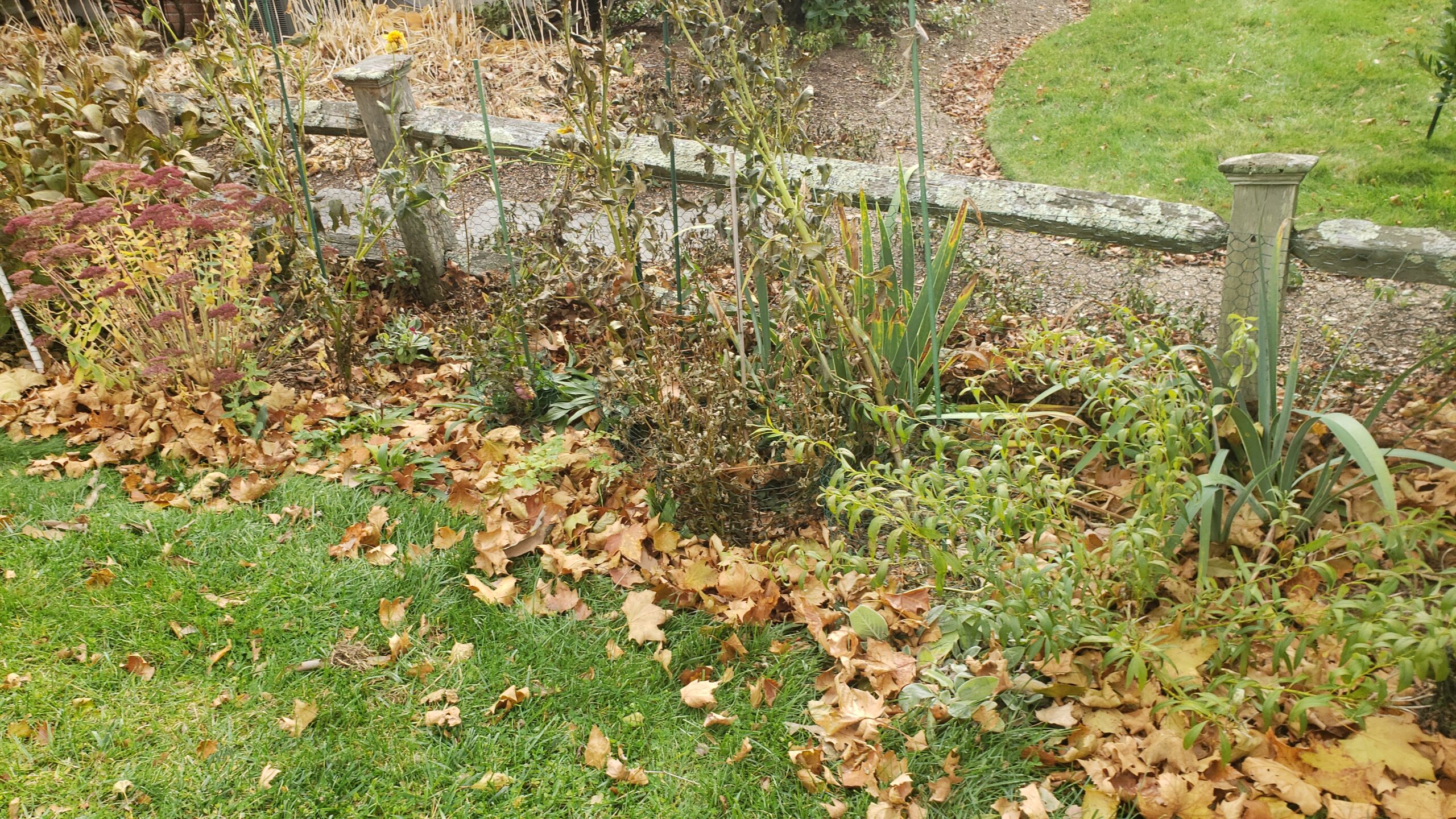
 Every year we hear that familiar soundtrack of the “fall cleanup,” as an army of leaf blowers descends on the newly fallen leaves. But before you haul those piles away, consider this: those leaves are one of the best free resources your yard will ever get.
The National Wildlife Foundation and the Xerces Society are urging us to “Leave the Leaves,” or at least only move them a bit.
Nature’s Blanket
Fallen leaves create a soft layer that protects soil and overwintering insects like butterflies, moths, beetles, and fireflies. According to research from the University of Maryland, removing or shredding that leaf layer can cause up to a 44% drop in butterflies and moths and a 67% drop in spiders. Those same leaves also act as insulation for your garden beds, shielding plant roots and bulbs from freeze-thaw cycles and feeding the soil as they decompose. Think of them as a cozy comforter for your garden through the winter.
How to Make It Work for You and Your Yard
We’re not asking anyone to let their lawn disappear under a mountain of leaves. The ideal is to keep what helps and move what doesn’t. If you use a landscaping crew, talk to them. Even leaving a small area leaf-covered helps. “Leaving the leaves” will look a little different for each person. Maybe it’s a small section of your yard left natural, or a sign that says, “This yard supports pollinators — leaves left intentionally.” A few hints:
- Keep leaves in garden beds and under shrubs. They’ll enrich the soil and protect plants.
- Avoid shredding leaves whenever possible. Shredders and mowers can destroy the insects that make leaf litter valuable habitat.
- Don’t leave a heavy layer of leaves on your lawn. Rake away what you can, and if you do use a mulching mower, leave a light layer.
- Clear high-traffic areas like walkways, driveways, and patios— just move those leaves into planting beds instead of bagging them.
Small Change, Big Impact
Americans generate about 35 million tons of yard waste each year. By letting more of them stay where they fall, you’re reducing hauling costs, cutting emissions from leaf blowers and trucks, and building healthier soil. And when more people do it — block by block, town by town — we start to see real community-scale benefits for biodiversity and climate resilience.
But What about Pine Needles?
If your yard has pines, you may be wondering: does the “leave the leaves” idea work for needles too? The answer is yes, with a few adjustments.
Pine needles are nature’s ready-made mulch. They’re light, airy, and interlock to stay put — even on slopes. They help the soil hold moisture, prevent erosion, and suppress weeds. In fact, many gardeners buy “pine straw” as mulch for azaleas, rhododendrons, and blueberries.
Needles break down more slowly than broad leaves, so they don’t feed the soil as quickly. They also form a dense mat if piled too thick, which can smother lawns or trap moisture against your house. If you have evergreen needles, try these simple rules of thumb:
- Leave them where they fall under pines and shrubs.
- Rake them off the lawn or thin them out if they pile more than 2–3 inches deep.
- Use them intentionally in garden beds.
- Keep a small buffer near foundations and walkways to avoid excess buildup.
Don’t worry about acidity. The old myth that pine needles “turn the soil acidic” doesn’t hold up. Once they decompose, their pH evens out quickly. Pine needles are part of your local ecosystem’s natural toolkit, just like leaves. Let them stay where they belong, and they’ll protect your soil.
