
 Back to school season doesn’t have to mean purchasing brand new school supplies or a new wardrobe every year. Both are costly and introduce unnecessary waste and plastic into an already overfilled planet. Below are our top 5 tips for starting the school year with as little plastic and waste as possible:
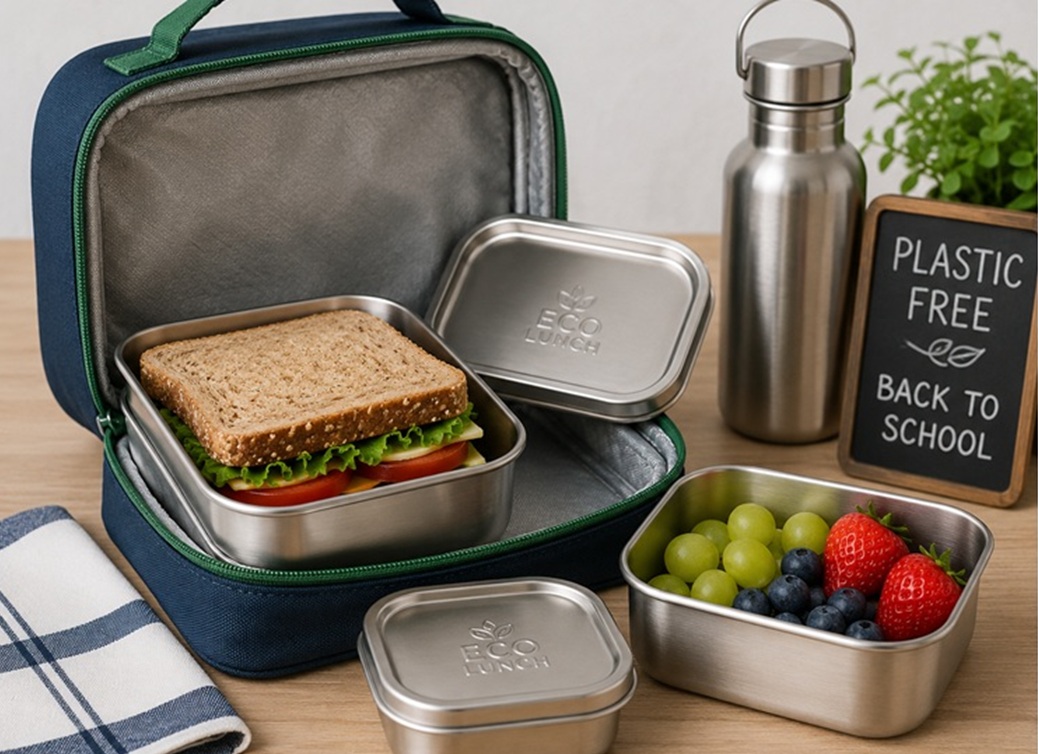
1. Invest in Reusable Foodware For Plastic-Free, Zero-Waste Snacks and Lunches
Swap single-use plastic sandwich bags for reusable, metal snack containers and sandwich tins. The light weight tins are durable and last for years, reducing waste AND household expenses in the long term. They also prevent food from being squished in soft sided lunch boxes. Stainless steel water bottles are another great swap – just be sure to label them with your student’s name in case they get misplaced. Finally, don’t forget the reusable cutlery! Remind students to toss their metal or bamboo fork, knife and spoon right back into their lunch box.
2. Reuse backpacks, lunch boxes, binders and supplies
While you may need to replace some items due to wear and tear, backpacks, lunch boxes and binders can often be used for multiple school years. Pencil cases, scissors, rulers and other school supplies can also be reused from year to year. Check through desks and closets for supplies before you buy something new. Opt for higher quality products and talk to your student about selecting items that they will be happy to use for several years. This is a great opportunity to teach your child the importance of taking care of their personal items, so they look great and last for a long time.
3. Find a bargain by thrifting
Shopping for a few new items of clothing is a fun way to prepare for the first day of school – but instead of hitting the mall, find a local thrift shop instead. At deeply discounted prices, it’s possible to find brand name clothing at great prices!
4. Hit the Needham Swap Shop
You never know what treasures you’ll find at the Swap Shop! Bring gently used supplies that you no longer need or want, and check out what other great items your neighbors may have donated. Items like white boards, cork boards, and binders are often in supply. And you might find a toy, game or sports equipment to bring home as well. Everything is free and donating items keeps them out of the landfill.
5. Support Local Businesses and Buy in Bulk
Shop locally to reduce your carbon footprint. Small businesses need our support more than ever. Shopping close by gives you the opportunity to bring your own bags and containers, which is impossible when you’re ordering online. Bring your own washable, reusable bags to fill up on fresh fruits and vegetables. See if your local market, co-op, or health food store has a bulk section for nuts, dried fruit, grains, etc. and follow their guidelines for bringing your own containers or bags. When faced with a choice of packaging, choose glass or paper over plastic.
Kids learn by example! As you get your kids thinking about how their own choices can make an impact, they begin to develop a mindset of refusing single-use and embracing environmental sustainability.
